
Reviewed · OIA & FIRA TOURS
Oia: Greek Cooking Class and Lunch with a Local Grandmother
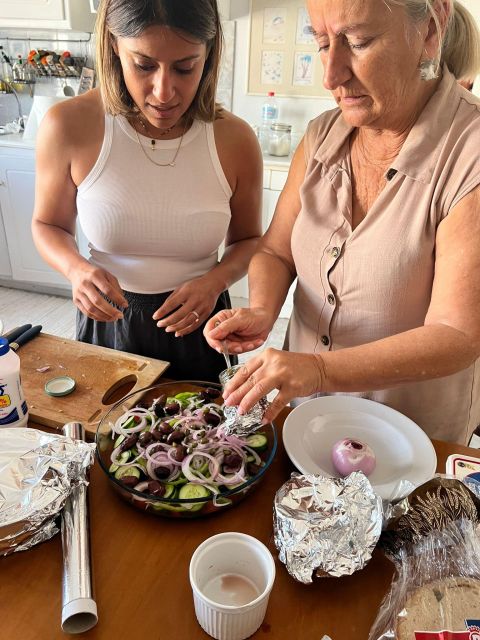
Cooking with Areti feels like family dinner. In Oia, this hands-on class has you working in a private kitchen with a 68-year-old yiayia who’s been cooking and teaching for decades, then sitting down to a full lunch you helped create.
I especially love the practical focus on technique, since Areti has 27 years of restaurant experience in Oia. I also like that your menu can be adjusted for vegan, vegetarian, and gluten-free diets instead of sticking you with a watered-down version. One drawback to consider: this is not a passive, watch-and-snack class. You’ll be actively cooking, so if you want quiet sightseeing time, it may feel a bit busy in the kitchen.
Quick hits before you go
- Areti, the yiayia host: A 68-year-old Santorini local with 27 years of restaurant ownership in Oia.
- Small-group format: Limited to 6 participants, so you get time and attention while you cook.
- Private kitchen in central Oia: You cook and eat in a home-style setting, not a public demo room.
- A true 4-course lunch: Appetizers, salad, main course, dessert, plus a glass of wine.
- Diet swaps are built in: Menus can be customized for vegan, vegetarian, and gluten-free needs.
- Take-home learning tools: You leave with recipe sheets and can recreate the dishes later.
Step Into Areti’s World in the Heart of Oia
Oia is famous for postcard views, but this experience trades scenery for something more useful: real cooking instructions from a life-in-the-islands cook. You meet outside Karma Restaurant and then get pulled into Areti’s kitchen, where the day feels less like a workshop and more like joining an in-progress meal.
What makes this work is the combination of age, experience, and pace. Areti has spent nearly her entire life on Santorini, and the class is guided by that steady rhythm local cooks use: taste, adjust, and move on to the next step without fuss. You’ll hear stories as you go, but the teaching stays practical, focused on how to make the flavors happen.
Also, the class is small, capped at 6 people, so you’re not waiting your turn for a camera-friendly demo. In a group this size, it’s realistic to get help when you’re chopping, mixing, or figuring out seasoning.
The main thing to know up front is that the vibe is hands-on. If you’re the type who enjoys rolling up your sleeves, this will feel like a standout part of your trip. If you’re only hoping to watch, you may find yourself itching to participate.
Between Oia and Fira, more clifftop walks
- Santorini: Oia Village Professional Photo Shoot★ 4.7 · 499 reviews
- Oia: Greek Cooking Class and Lunch with a Local Grandmother★ 4.9 · 208 reviews
- Santorini: 40-Minute Oia Photoshoot★ 4.9 · 86 reviews
From Karma Restaurant to a Private Kitchen Setup
The meeting point is outside Karma Restaurant, in Oia. From there, you’ll be directed into a private kitchen space where Areti runs the class. Since the duration is 3 hours, plan to treat this as a focused morning or lunch anchor, not something you casually fit in between wanderings.
Language support is another practical plus. Areti’s greeter/support team can work in English, French, and Greek, so you’re not stuck translating your way through cooking terms. Even if you’re not fluent, the steps are taught through action, and you’ll get prompts while you cook.
Once everyone settles, roles start getting assigned. You’ll be doing more than one task across the meal, because the workshop is designed around participation. That matters for two reasons: you learn the method, not just the final dish, and you also get a sense of how the meal comes together as one coordinated system.
If you’re traveling with kids, this format can work well too. The class is built for engagement, and you’ll see how the pace holds attention while still producing a real lunch at the end.
The 4 Courses You’ll Cook, and What They Teach You
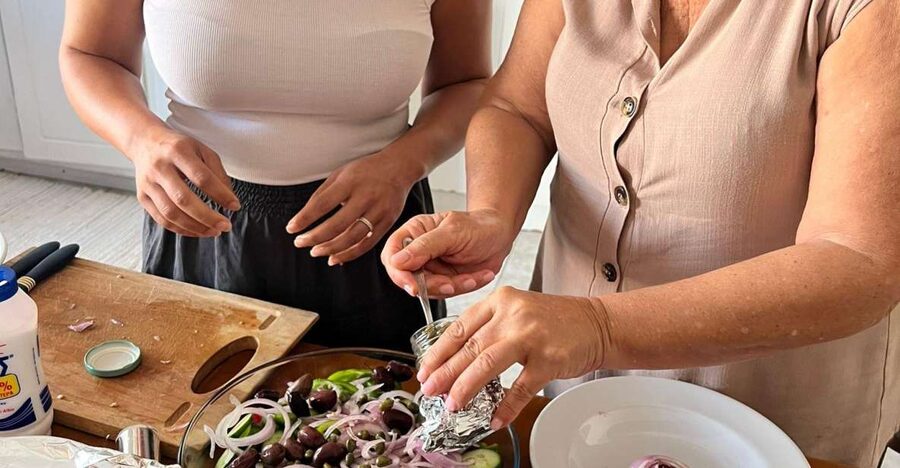
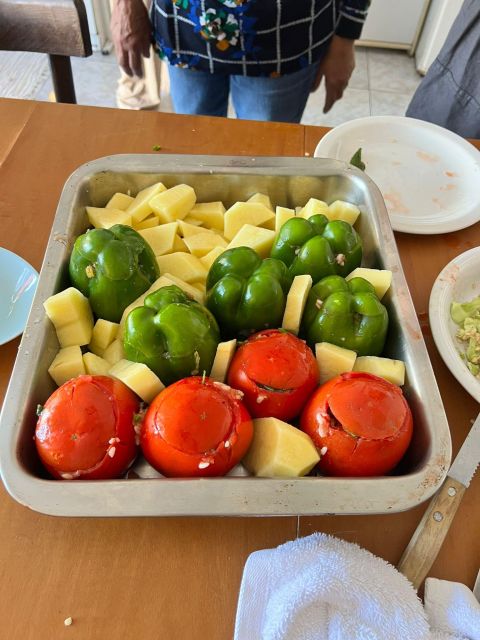
This is a 4-course meal experience. You’re making appetizers, salad, a main course, and dessert, then eating what you cooked alongside a glass of wine. The exact menu can vary, but the structure stays consistent, and that’s what makes it so valuable for recreating at home.
Here are examples of dishes that have shown up in the cooking process. Not every group will necessarily get the same lineup, but these are real Santorini and Greek-style options you might be taught to make:
- Meatballs in tomato sauce
- Fava beans
- Greek salad
- Eggplant salad
- Stuffed eggplants
- Tzatziki
What you should take from that is the range of flavors. Greek cooking here is not about one sauce or one herb doing all the work. It’s about combining a few core ingredients, then using technique to make each one taste intentional.
The appetizer course teaches you early building blocks, usually around prepping ingredients and balancing seasoning. The salad course helps you learn the difference between just tossing greens and making a salad that’s actually satisfying, especially with how acidity and olive oil are handled. The main course is where you learn how to coordinate cooking times and textures, so everything hits the table without one item feeling like an afterthought. And dessert is a reminder that Greek meals end sweet, not heavy, and that tasting as you go matters.
Also, you’ll likely be given notepads and pens so you can track steps. That turns the class from a fun lunch into a cooking reference you can actually use.
The Technique Secrets That Make Greek Food Taste Like Greek Food
Greek cooking has a reputation for being simple, but the class makes clear that simple does not mean careless. The magic is in the details, and Areti’s approach focuses on those repeatable techniques.
You’ll hear and practice things like:
- How to season early, not only at the end
- How to manage textures, especially with vegetables and dairy-based components
- How olive oil and herbs are used as flavor architecture, not just garnish
- How to build a sauce so it clings, rounds out acidity, and tastes finished
The hands-on side is key. When you stir, chop, and assemble, you start to understand why one step matters. Reviews also point to Areti being patient and interactive, including techniques and small cooking hacks that make future meals easier, even if you’re not cooking full Mediterranean feasts at home.
One of my favorite aspects of this style of cooking class is that you leave with more than recipes. You leave with decision-making. That means when you cook at home and a tomato tastes more acidic or an eggplant seems more bitter, you know what to adjust.
And if you’re worried about skill level, the teaching is designed to bring everyone in. Roles are assigned based on what you tell Areti at the start, so beginners can contribute without feeling lost.




Fresh, Organic Ingredients and Why That Matters
A cooking class can promise fresh ingredients and still feel generic. Here, fresh and organic ingredients are part of the experience, and it shows in how the meal tastes.
Why that matters for you: ingredient quality is the shortcut that keeps home cooking from turning into frustration. If you learn seasoning and timing using ingredient quality you can trust, your results at home become much easier to replicate.
In Greek and Santorini kitchens, ingredients often carry the flavor. Tomatoes taste like tomatoes, herbs taste alive, and olive oil isn’t just a background fat. When you cook with that, you learn what the ingredient is supposed to do before you start layering flavors.
Another practical benefit: you’ll get used to assembling flavors in a Mediterranean pattern. That helps you cook outside this menu too. For example, once you learn the logic behind tzatziki or eggplant prep, you can reuse those techniques in other dishes, even if your kitchen is stocked differently than Areti’s.
Wine, Leftovers, and the Social Side of Cooking Together
This experience includes a glass of wine with your meal. It’s not a heavy drinking event, but it sets a relaxed tone for the part that matters most: eating what you made.
Because the group is capped at 6, the lunch tends to feel warm and personal. You’ll work with others in the kitchen, then sit together for the meal. The format naturally creates conversation, and you’ll get to know people quickly when you’re all chopping, mixing, and plating.
A nice real-world detail: you can often take food home. Some groups report getting small boxes for leftovers, which is a big deal when the portions are generous. That also changes the value calculation. You’re not only getting one lunch, you may get one or two more meals back in your rental apartment.
One additional point from some experiences is that, depending on the day, you might be offered more than just the included wine. Keep it simple in your expectations and focus on what’s definitely included. But it’s good to know the host hospitality can extend beyond the minimum.
Vegan, Vegetarian, and Gluten-Free Customization That Doesn’t Feel Like a Trap
Diet accommodations are built into the class. Menus can be customized for vegan, vegetarian, and gluten-free needs. That matters because cooking classes fail the same way many restaurants do: they treat dietary needs like a minor inconvenience.
Here, you’re not just told to avoid certain items. You’re working through a menu that can adapt. That means you still learn the core techniques and flavor logic without feeling excluded from the group meal.
If you’re vegan or gluten-free, pay attention to the steps you’re doing, not only the final dish. The benefit is that your at-home cooking becomes less about guesswork. You learn how to achieve the same satisfaction using ingredients that fit your needs.
If you’re traveling with mixed diets, this can also be a stress reducer. Instead of splitting the group at restaurants, you’re cooking together and eating together, with options handled in the same session.
Price and Value: Is $153 Worth It in Santorini?
At $153 per person for a 3-hour experience, the price sits in the mid-to-upper range for Santorini activities. The question is what you’re actually buying.
You’re paying for:
- Hands-on instruction from Areti, not a generic guide
- A small group cap of 6 participants, so you’re not fighting for attention
- A full 4-course lunch (appetizers, salad, main, dessert)
- A glass of wine
- Recipe sheets to recreate dishes later
In many places, you’d pay similar money for a tour and a light meal. Here, most of that cost is tied to actual cooking time, food prep, and the meal itself. And since you may take leftovers home in some cases, the meal value stretches beyond the 3-hour window.
You also get a unique kind of value that’s hard to price: technique learning. Recipes are fine, but learning how to taste and adjust is what makes cooking at home feel less like copying and more like cooking.
So for me, the value makes sense if you want a practical, interactive experience. If your style is purely sightseeing and photo stops, this might feel like money spent on something you could do later. But if you enjoy food and want a memorable skill you can use, it’s a strong buy.
Who Should Book This Class (And Who Might Prefer Something Else)
This is ideal for:
- Couples who want a memorable shared experience, not just dinner
- Friends and small groups who like hands-on activities
- First-time cooks who want recipes plus real technique tips
- People with dietary restrictions, because vegan, vegetarian, and gluten-free menus can be customized
- Families who want a warm, engaging activity with clear tasks for different levels
It might be less ideal for:
- Anyone who wants a mostly quiet, observational class
- Travelers who are schedule-tight and cannot spare a full 3 hours for cooking and eating
The sweet spot is someone who likes food and wants a story with it. You’re not only leaving with full bellies, you’re leaving with tools, like recipe sheets and a better understanding of how Greek dishes are built.
Should You Book Areti’s Greek Cooking Class?
Yes, I’d book it if you want a genuine Santorini meal experience that comes with usable technique. The combination of a small group, a 3-hour cooking-and-lunch format, and Areti’s background as a longtime Oia restaurant owner makes this feel more like a real cooking lesson than a staged show.
Book it especially if you care about dietary needs. The class is set up to customize menus for vegan, vegetarian, and gluten-free diets, which is exactly what you want when you’re away from home.
If you’re unsure, use this rule of thumb: if you’d enjoy learning to cook and eating the results, you’ll be happy you did. If you only want passive sightseeing, look for something else and save your kitchen appetite for your next home meal.
FAQ
How long is the cooking class and lunch?
The experience lasts 3 hours.
How big is the group?
It is limited to a small group of 6 participants.
What is included in the price?
You get the cooking class, a 4-course meal, a glass of wine, and recipe materials.
Where do we meet?
You meet outside Karma Restaurant.
Can the menu be adjusted for dietary needs?
Yes, menus can be customized for vegan, vegetarian, and gluten-free diets.
Is there free cancellation or a pay-later option?
Free cancellation is available up to 24 hours in advance for a full refund, and you can reserve now and pay later.
More Tour Reviews in Oia
- Santorini: Oia Village Professional Photo Shoot
★ 4.7 · 499 reviews - Oia: Couple photoshoot with 30 edited Photos
★ 4.9 · 388 reviews - Santorini: 40-Minute Oia Photoshoot
★ 4.9 · 86 reviews - Santorini: Unique Flying Dress Photoshoot Experience
★ 4.7 · 84 reviews - Santorini: Flying Dress Photoshoot
★ 4.9 · 56 reviews
Oia, Fira and the Cliff Path
- Santorini: Oia Village Professional Photo Shoot
★ 4.7 · 499 reviews - Oia: Couple photoshoot with 30 edited Photos
★ 4.9 · 388 reviews - Santorini: 40-Minute Oia Photoshoot
★ 4.9 · 86 reviews
Just Reviewed: Fresh Oia Trips





Oia & Fira Tours, compared.
 ★ 4.0Volcano and Hot Springs Cruise Tour from Fira Old PortFrom $361,214 reviews
 ★ 4.5Day Tour with Sunset in OiaFrom $711,130 reviews
 ★ 5.0Half Day Premium Catamaran Cruise in Santorini including OiaFrom $193988 reviews
 ★ 4.5’s Iconic Villages: Oia, Imerovigli & FirostefaniFrom $62708 reviews
 ★ 4.7Oia Village Professional Photo ShootFrom $116499 reviews
 ★ 4.9Fira: Guided Foodie Walking Tour with TastingsFrom $135474 reviews
 ★ 5.0Food Tour: Fira Half-Day Small-Group Tour with TastingsFrom $151437 reviews
 ★ 4.9Oia: Couple photoshoot with 30 edited PhotosFrom $169388 reviews
Browse the lists this tour appears in